

Why does a small error on the label generate such a huge cost?
For a quality, imports, or regulatory compliance manager, the goal is clear: to ensure that products reach the shelf without a hitch, complying 100% with regulations. However, in the complex regulatory landscape of Latin America and the United States, a minor detail omitted from a label is not a minor error; it is a financial and operational risk.
The costs of poor labeling go far beyond a fine. We are talking about customs delays that disrupt the supply chain, emergency relabeling costs, destruction of merchandise, and, worse still, loss of consumer confidence and damage to reputation.
Based on our multi-sector experience, we have identified the five most common and costly mistakes companies make when importing products.
The 5 most common mistakes in import labeling
1. Omitting or incorrectly identifying the Importer of Record (IOR)
The most critical error. Many regulations, especially in the United States and Latin American markets, require that the label clearly identify the legal representative of the product in the country: the Importer of Record (IOR). Failure to include this information or providing outdated information is grounds for immediate detention at customs.
The Cost: Goods are held until the correct information is provided, resulting in storage costs, delays, and often the need to re-label at a bonded warehouse before release.
2. Poor or non-existent translations
Importing into Spanish-speaking markets (or English-speaking markets, in the case of the US or Trinidad and Tobago) requires translations. The costly mistake is not just forgetting to translate, but doing a literal translation instead of a located. The terminology for ingredients, warnings, and instructions for use must correspond to the exact technical and legal language of the destination country.
The Cost: Penalties for misleading or incomprehensible information for consumers, and rejection of the product by health authorities.
Penalties for misleading or incomprehensible information for consumers, and rejection of the product by health authorities.
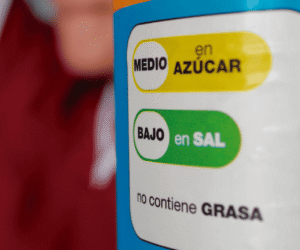
Believing that an FDA-approved label will work “as is” in Chile or Colombia is a costly mistake. Each country has its own regulations on health claims, allergen listings, and, critically, front-of-package warning labels (octagons).
The Cost: Prohibition on the sale of the product. Public health regulations (such as warning labels) are non-negotiable, and penalties for non-compliance are severe.
4. Incomplete basic information: Country of Origin and International System (SI)
These are details that are taken for granted and, as a result, fail. The statement “Made in...” (Country of Origin) is a legal requirement, not an option. Likewise, while the US uses the imperial system (ounces, pounds), the vast majority of markets require the International System (grams, milliliters). The label must be clear and, in many cases, bilingual in its units.
The Cost: Technical rejection during inspection. Requires the goods to be stopped in order to place stickers corrective measures, a manual process that is costly and detracts from the professionalism of the product.
5. Graphic and readability inconsistencies
The authority not only checks what the label says, but also how it says it. Graphic quality control is essential. If the font size of the warnings is smaller than stipulated, or if the list of ingredients is illegible due to color contrast, the label is considered non-compliant.
The Cost: Loss of consumer confidence and brand image. And, of course, fines for non-compliance with legibility standards designed to protect the customer.
How to avoid these mistakes:
Prevention is key
For the analytical, results-oriented professional, the solution is not to react to the penalty, but to implement a robust validation process. This requires detailed, up-to-date knowledge of regulations governing each country and standardized processes to reduce human error.
Ensuring compliance is not an expense; it is an investment that protects your operation, your reputation, and ensures your competitive success in international markets.