The challenge of “non-unification” in LATAM labeling
For any import or regulatory compliance manager handling products in Latin America, the front-of-package labeling landscape is one of the biggest challenges. The belief that a single package can serve the entire region is a costly mistake. Despite sharing public health goals, major markets have adopted drastically different nutritional warning systems.
Understanding these differences is the first line of defense in avoiding penalties, customs delays, and costly relabeling processes. As part of our experience in multiple markets, we analyze the key differences between three of the most important regulations: Chile, Colombia, and Ecuador.
Comparative Analysis: Octagons vs. Traffic Lights
1. Chile: The Pioneer of Black Octagons
Chile was the regional leader in implementing its Food Labeling Law. Its system is recognized worldwide and is based on very direct front-of-package warning labels.
- Format: Black octagons with white letters.
- Message: “HIGH IN...” (Calories, Sugars, Sodium, Saturated Fat).
- Focus: It is a pure “warning” system. It does not rate, it simply alerts you to excess critical nutrients.
- Implication: This is one of the strictest systems. A product that does not carry seals in its country of origin may need them to enter Chile, requiring nutritional validation in accordance with specific limits.
2. Colombia: The Evolution of the Octagon
Following the regional trend, Colombia updated its regulations (Resolution 810 of 2021) to also adopt a front-of-package labeling system. However, there are key differences between this system and the Chilean model.
- Format: Originally, circular shapes were proposed, but the most recent regulations align with black octagons.
- Message: “HIGH IN...” (Added Sugars, Sodium, Saturated Fats) and “CONTAINS SWEETENERS.”
- Key Difference: Colombian regulations are specific about “added sugars” (not total sugars) and include a particular warning for sweeteners, which directly impacts the “light” food and beverage industry.
3. Ecuador: The “Nutritional Traffic Light” System
Ecuador has completely distanced itself from the octagon warning label model. Its graphic system seeks to educate consumers in a different way.
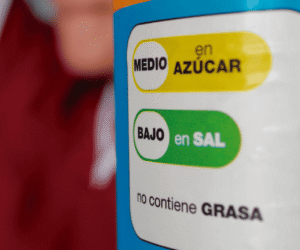
- Format: A horizontal bar chart with traffic light colors (Red, Yellow, Green).
- Message: Indicates the concentration of fat, sugar, and salt (sodium) in the product, rating them as “HIGH” (red), ‘MEDIUM’ (yellow), or “LOW” (green).
- Implication: This system requires a completely different analysis and graphical presentation. A “labeling map” designed for Chile is 100% incompatible with Ecuadorian requirements.
Conclusions for the Compliance Manager
As an analytical professional, this comparison reveals three undeniable realities:
- There is no such thing as a “one-size-fits-all” solution: Unique packaging for these three countries is logistically impossible without extensive (and sometimes unauthorized) use of stickers correctives.
- The Graphic Challenge is Real: The “labeling map” becomes complicated. The space on the packaging must be strategically designed to accommodate visually incompatible systems if a common packaging base is to be used.
- Nutritional Calculation is Specific: The limits (thresholds) for defining “HIGH IN” vary between countries, as does the way they are calculated. Validation of nutritional content is essential for each target market.
Don't risk your product: Specialization is your best ally
Navigating this regulatory mosaic requires a detailed knowledge of each country's regulationsHaving a partner that offers precision and standardized processes ensures that your products meet the highest standards, avoiding penalties and guaranteeing consumer confidence.